Knee Replacement & Related Procedures Offered By Knee Replacement Surgeon in Pune
Dr. Swaroop Solunke performs the full range of knee replacement surgery, and the type
recommended depends on how much of the joint is damaged and the patient's overall bone health.
Total knee replacement (TKR) resurfaces the entire knee joint and is used for advanced arthritis
affecting all three compartments. Partial (unicompartmental) knee replacement resurfaces only
the damaged compartment, preserving healthy bone and ligaments, and is suited to arthritis
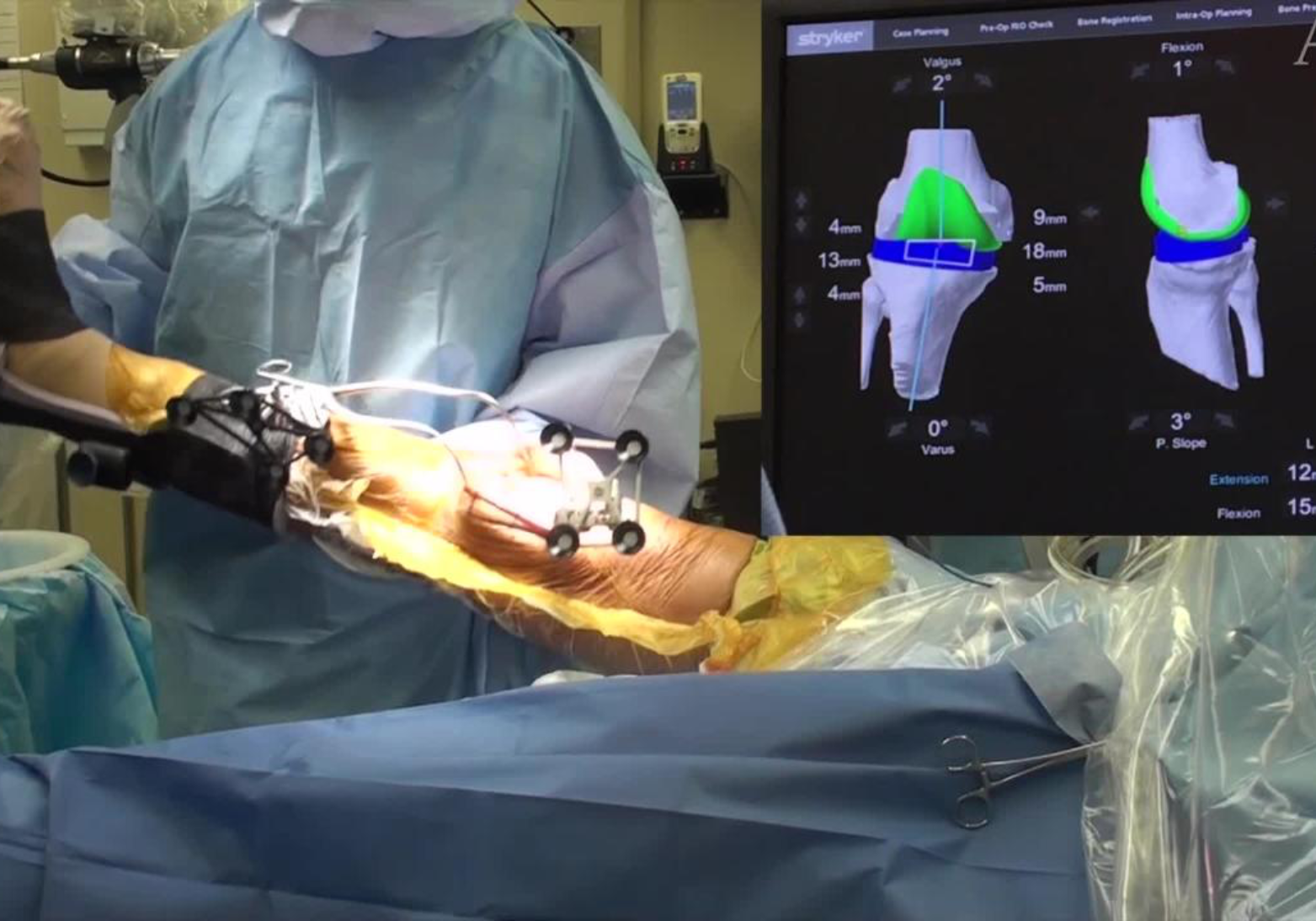
limited to one part of the knee. Robotic-assisted total and partial knee replacement uses a
robotic arm and 3D pre-operative mapping to position the implant with greater precision than
manual instrumentation alone. Minimally invasive (subvastus) knee replacement uses a
muscle-sparing surgical approach that avoids cutting through the quadriceps tendon, supporting
faster early mobility. Revision knee replacement replaces or corrects a previously implanted
knee that has worn out, loosened, or failed. Bilateral knee replacement treats both knees
— either staged across two surgeries or, in select cases, in a single admission —
for patients with advanced arthritis in both joints. For younger patients or early-stage
cartilage and ligament damage, Dr. Solunke also performs knee arthroscopy with ACL
reconstruction or meniscus repair, a joint-preserving keyhole alternative to full replacement.
Robotic-Assisted Knee Replacement — What Makes It Different
Robotic assistance doesn't replace the surgeon's judgement; it adds a layer of precision to
implant positioning and alignment that's difficult to match with instruments alone. During
surgery, the system maps the knee's anatomy in real time and helps place the implant within
the planned position and angle, which matters for how naturally the joint moves afterward
and how evenly it wears over the years. Dr. Solunke trained specifically in this technique
during his US fellowship at the Stone Research Foundation, San Francisco, and now offers it
alongside conventional and minimally invasive approaches at his Wakad clinics.
Advanced Technology & Techniques Used
The clinic's technique range comes directly from Dr. Solunke's fellowship training rather than
being added on later, which is part of why it spans robotic, minimally invasive and conventional
approaches under one roof.
-
Robotic-arm assisted surgical system for total and partial knee replacement, used for
precise implant alignment
-
CT/3D-based pre-operative planning to map the joint before surgery begins
-
Minimally invasive subvastus approach that spares the quadriceps muscle
-
DEXA bone density scanning to guide treatment planning in patients with osteoporosis-linked
joint disease
-
Structured post-op physiotherapy protocols starting from day one to support faster
mobilisation
Cost of Knee Replacement in Pune
Knee replacement cost varies by procedure type (unilateral vs. bilateral), technique
(conventional vs. robotic-assisted), implant, and length of hospital stay. Dr. Swaroop's Ortho
& Polyclinic is positioned as a patient-friendly, accessible option in Pune —
mid-range pricing rather than premium corporate-hospital rates — so cost isn't a barrier
to getting fellowship-level surgical care.
Recovery and Rehabilitation
Recovery timelines vary by procedure and by the patient's baseline mobility, but the general
pattern for a well-managed knee replacement is walking with support within a day or two,
transitioning off a walker over the following weeks, and returning to most daily activities
within six to twelve weeks. Physiotherapy is built into the plan from the first post-op day
rather than added later, and follow-up visits are scheduled at the clinic closest to the
patient — Wakad, Kush Neuro Cardiac Hospital, or Joint Aura Ortho and Polyclinic in
Nigdi — to keep travel manageable during recovery.
Clinic Locations Across Pune & PCMC
| Clinic |
Area |
Role |
| Dr. Swaroop's Ortho & Polyclinic |
Wakad |
Primary clinic |
| Joint Aura Ortho and Polyclinic |
Nigdi-Pradhikaran |
Consultation & surgery |
Areas We Serve
Patients travel to Dr. Solunke's clinics from across Pune and the PCMC belt, including:
-
Wakad, Baner, Hinjewadi — primary catchment around the Wakad clinic
-
Pimpri, Nigdi, Pimple Saudagar — served via the Nigdi-Pradhikaran clinic
-
Aundh, Shivajinagar and central Pune — consultation availability listed on the
respective GBP profiles
Pre-Consultation Checklist
Bringing the right information to the first visit means Dr. Solunke can assess the joint
properly on day one, instead of asking the patient to come back with reports. Before your
appointment, gather:
-
Previous X-rays, MRI or CT scans of the knee (physical films or a soft copy on a phone/USB
works)
-
Records of any earlier treatment — medications, injections, physiotherapy — for
this joint
-
A current medication list, including anything for diabetes, blood pressure or blood thinners
-
A brief timeline of the pain: when it started, what makes it worse, and how it affects daily
activities
-
Insurance or cashless-approval documents, if applicable
-
A list of questions for the surgeon — recommended surgery type, expected recovery
time, cost, etc.
-
Comfortable, loose clothing that allows easy examination of the knee
-
Someone to accompany you if walking or standing for long is difficult