Frozen shoulder is the orthopedic problem that most patients first ignore, then panic about, then resign themselves to. They wake up one morning unable to fully raise the arm. They assume it will pass. Six weeks later, they cannot fasten a bra strap, reach an overhead shelf, or sleep on the affected side. By the time they reach Dr. Swaroop's Ortho and Polyclinic at Wakad, they have usually been stuck in this state for two to four months.
The good news is that frozen shoulder is a recognized condition with a defined natural course and proven treatments. Most patients recover fully with the right plan, even though the journey takes time.
What Is Frozen Shoulder?
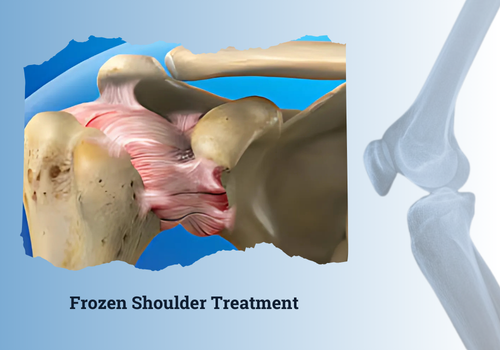
Frozen shoulder, medically called adhesive capsulitis, is inflammation and thickening of the capsule that surrounds the shoulder joint. The capsule normally allows free movement. When inflamed, it becomes tight and contracted, gradually restricting movement in all directions.
The condition affects roughly 2 to 5 percent of the general population. The risk is dramatically higher in certain groups.
- Diabetics: 20 percent lifetime risk, often affecting both shoulders
- Patients aged 40 to 65
- Women more than men, particularly post-menopausal
- Patients with hypothyroidism or Parkinson's disease
- Patients who have had a recent shoulder injury, surgery, or prolonged immobilization
- Stroke survivors with arm weakness
Three Phases of Frozen Shoulder
Phase 1 - Freezing (Painful Phase): 2 to 9 months
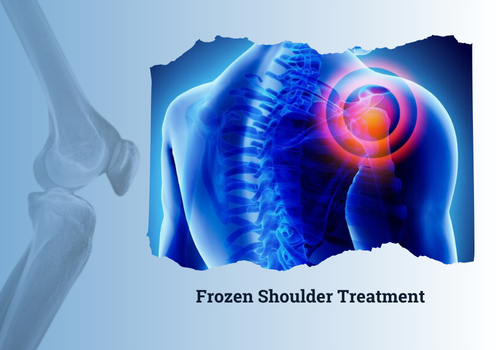
Pain is the dominant symptom. Pain at night, pain when lying on the affected side, pain that wakes the patient. Movement gradually becomes restricted. Most patients first see a doctor during this phase.
Phase 2 - Frozen (Stiff Phase): 4 to 12 months
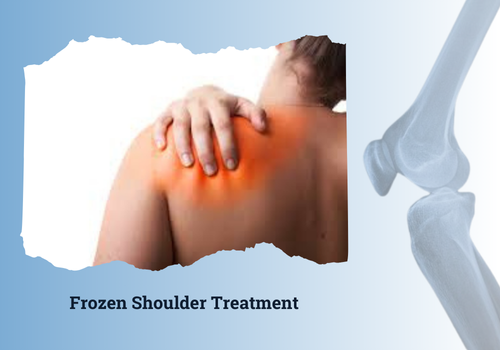
Pain reduces but stiffness intensifies. The patient cannot raise the arm above the shoulder, cannot reach behind the back and cannot do simple tasks like combing hair or wearing a shirt without help. This is the phase where most patients seek surgical opinions.
Phase 3 - Thawing (Recovery Phase): 6 to 24 months
Movement gradually returns. Stiffness eases. Most patients regain near-normal function over 1 to 2 years from the start of the disease, though some are left with residual restriction.
Total natural course is 18 to 30 months. With active treatment, the journey is significantly shortened.
Treatment Options by Phase
Treatment During Freezing Phase (Pain Dominant)
Pain control is the priority. Forced movement during this phase makes things worse.
- Oral pain medication and short courses of NSAIDs
- Gentle pendulum exercises and pain-free range of motion stretches
- Intra-articular steroid injection - provides 6 to 12 weeks of significant pain relief in most patients
- Hot fomentation and ultrasound therapy at the clinic physiotherapy unit
- Sleep modification: pillows to prop the arm in a comfortable position
Treatment During Frozen Phase (Stiffness Dominant)
Pain is less, so aggressive stretching becomes safe and necessary.
- Structured physiotherapy 3 times a week with a trained therapist
- Daily home exercise programme - wall climb, towel stretch, cross-body stretch
- Hydrodilatation - saline and steroid injection that physically expands the joint capsule
- Manipulation under anesthesia (MUA) - controlled forced movement under anesthesia
- Arthroscopic capsular release - keyhole surgery to cut the tight capsule
Treatment During Thawing Phase
Maintenance physiotherapy. Most patients continue to improve gradually with home exercises and occasional supervised sessions.
Specific Treatments Explained
Steroid Injection
Cortisone injected into the shoulder joint reduces inflammation rapidly. Most patients feel significant pain relief within 3 to 5 days. The effect lasts 6 to 12 weeks. Up to 3 injections per year are safe. Injection is best done in the early painful phase. Cost: Rs. 1,500 to Rs. 4,000.
Hydrodilatation (Distension Arthrography)
Under fluoroscopy or ultrasound, a mixture of saline, steroid and local anesthetic is injected into the shoulder joint at sufficient pressure to physically stretch and tear small adhesions in the capsule. The procedure takes 15 minutes. Most patients show significant range improvement within 2 weeks. Cost: Rs. 8,000 to Rs. 15,000.
Manipulation Under Anesthesia (MUA)
The patient is given general anesthesia, then the surgeon moves the arm through full range to break adhesions. This is a 15-minute procedure with same-day discharge. Best for patients in the frozen phase who have failed 3 to 4 months of physiotherapy. Aggressive physiotherapy must follow within 24 hours. Cost: Rs. 25,000 to Rs. 50,000.
Arthroscopic Capsular Release
Keyhole shoulder surgery where the surgeon directly visualizes and divides the tight capsule with a small instrument. Reserved for patients who fail all other treatments, or for diabetic patients with very stiff shoulders. Day-care or 24-hour stay. Aggressive physiotherapy starts the next day. Cost: Rs. 1 to 1.5 lakh.
Special Considerations for Diabetic Patients
Frozen shoulder behaves differently in diabetics.
- Both shoulders are affected in 50 percent of diabetic cases
- Symptoms tend to be more severe and longer lasting
- Response to steroid injections is less reliable
- Surgical release has slightly higher recurrence rates
- Tight diabetes control improves outcomes significantly
Dr. Solunke uses a modified protocol for diabetic frozen shoulder - earlier hydrodilatation, more aggressive physiotherapy and earlier surgical decision-making when stiffness persists beyond 4 to 6 months.
Recovery Timeline After Treatment
After Steroid Injection
Pain relief begins in 3 to 5 days, peaks at 2 weeks, lasts 6 to 12 weeks. Physiotherapy is started within 1 week.
After Hydrodilatation
Significant range improvement in 2 to 4 weeks. Maximum benefit at 8 to 12 weeks. Continued physiotherapy mandatory.
After MUA or Arthroscopic Release
Aggressive physiotherapy starts within 24 hours, 5 to 7 days a week initially, then tapering. Most patients achieve 80 percent range within 6 to 8 weeks. Full recovery in 3 to 6 months.