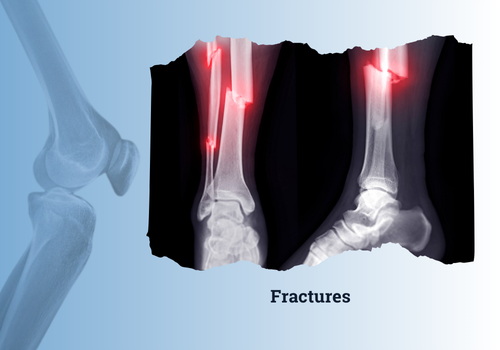
A fracture is a broken bone. That is the simple definition. The complicated part is what to do about it - and the answer is different for every patient, every bone, every fracture pattern. This page walks through the most common fractures seen at Dr. Swaroop's Ortho and Polyclinic in Wakad and how each is treated.
Types of Fractures Explained
Closed Fracture
Bone is broken but skin is intact. Most fractures fall in this category.
Open (Compound) Fracture
Bone has broken through skin. This is a surgical emergency - every hour without proper cleaning and stabilization raises infection risk.
Hairline (Stress) Fracture
A small crack in the bone, often caused by repetitive impact. Common in runners and military recruits. Usually heals with rest and a brace.
Greenstick Fracture
Common in children. The bone bends and partially breaks rather than snapping cleanly. Heals quickly in a cast.
Comminuted Fracture
Bone breaks into three or more fragments. Almost always needs surgical fixation.
Displaced Fracture
The bone fragments have moved out of normal alignment. Most need either reduction (manual realignment) or surgery.
Non-displaced Fracture
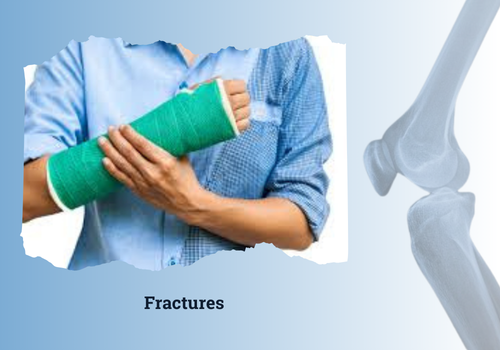
Bone is broken but fragments remain in correct position. Often heals well in a cast.
Spiral Fracture
A twisting injury that produces a spiral break around the bone. Common in skiing accidents and child abuse cases.
Avulsion Fracture
A small piece of bone is pulled away by a tendon or ligament during sudden force. Common in ankles and fingers.
Fracture Treatment by Body Part
Hand and Finger Fractures
Most finger fractures heal in a buddy splint (taping the broken finger to the next one) or aluminium splint. Metacarpal (palm bone) fractures may need a cast or, if displaced, mini-screws or K-wires. Cost ranges from Rs. 3,000 for casting to Rs. 50,000 for surgical fixation.
Wrist Fractures
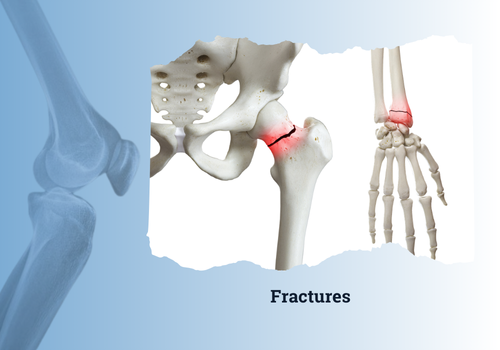
The most common adult fracture. A fall on outstretched hand. Stable fractures heal in a below-elbow cast for 6 weeks. Displaced wrist fractures in adults usually need volar plating - a small plate fixed through a 4 to 5 centimetre incision. Cost: Rs. 60,000 to Rs. 90,000.
Forearm Fractures
Children with greenstick or buckle fractures heal in a cast. Adults usually need plate fixation of the radius and ulna. Cost: Rs. 70,000 to Rs. 1.1 lakh.
Elbow Fractures
Olecranon and distal humerus fractures often need plating. Radial head fractures may heal without surgery. Children with supracondylar humerus fractures (a common playground injury) are often managed with manipulation and percutaneous K-wires under anesthesia.
Shoulder and Clavicle Fractures
Most clavicle fractures heal in a sling for 4 to 6 weeks. Significantly displaced clavicle fractures benefit from plate fixation. Proximal humerus fractures are decided case-by-case - some need fixation, some heal in a sling.
Hip Fractures
In elderly patients, hip fracture is a serious injury. Femoral neck fractures usually need hip replacement (in older patients) or screw fixation (in younger patients). Inter-trochanteric fractures are typically fixed with a dynamic hip screw (DHS) or proximal femoral nail (PFN). Surgery is best done within 24 to 48 hours.
Femur (Thigh Bone) Fractures
Adult femur fractures almost always need intramedullary nailing - a long metal rod inserted through a small incision near the hip, down the inside of the bone. Closed nailing means the fracture site is never opened, preserving blood supply. Cost: Rs. 1.2 to 1.8 lakh.
Tibia (Shin Bone) Fractures
Treated with intramedullary nailing or plating. Open tibia fractures may need external fixation followed by definitive internal fixation. Cost: Rs. 1.2 to 1.8 lakh for closed nailing.
Ankle Fractures
Stable ankle fractures (one bone broken, no displacement) heal in a cast or boot. Unstable fractures need plates and screws. Most ankle surgeries take 60 to 90 minutes.
Foot Fractures
Calcaneus (heel bone) fractures are often complex and may need surgery. Metatarsal (foot bone) fractures usually heal in a special boot or cast. Toe fractures heal with buddy taping.
Spine Fractures
Compression fractures from osteoporosis are managed with bracing or, in severe cases, vertebroplasty / kyphoplasty (cement injection). Burst fractures from high-energy trauma may need open fixation with rods and screws.
Pelvic Fractures
Stable pelvic fractures heal with rest. Unstable pelvic fractures from road accidents are surgical emergencies - they cause major bleeding and need immediate stabilization with external fixator or plating.
How Long Does a Fracture Take to Heal?
- Finger or toe fracture: 3 to 4 weeks
- Wrist fracture: 6 weeks in cast, 8 to 12 weeks total recovery
- Forearm fracture: 6 to 8 weeks
- Clavicle fracture: 6 to 8 weeks in sling
- Tibia or femur fracture: 12 to 16 weeks for bone healing, 6 months for full activity
- Hip fracture in elderly: 6 weeks to walk with stick, 3 months to full recovery
- Spine compression fracture: 6 to 12 weeks
- Pediatric fractures: usually 50% faster than adult fractures
Pricing Summary
- Cast or brace treatment (no surgery): Rs. 3,000 to Rs. 8,000
- Wrist or forearm plating: Rs. 60,000 to Rs. 1.1 lakh
- Tibia or femur nailing: Rs. 1.2 to 1.8 lakh
- Hip fracture fixation: Rs. 1.2 to 1.8 lakh
- Hip fracture treated with replacement: Rs. 1.2 to 1.5 lakh excluding implant
- Complex multi-fragment fracture: Rs. 1.5 to 3 lakh