Best Partial Knee Replacement Surgery in Pune
Home /Partial Knee Replacement Surgery in Pune
The knee has three compartments - inner (medial), outer (lateral) and front (patellofemoral). In about 20 percent of arthritis cases, only one of these compartments is damaged. The other two are essentially healthy. For these patients, replacing the entire knee is overkill. A partial knee replacement preserves the healthy parts and replaces only what is broken.
Done well, partial knee replacement feels more natural than a total knee, recovers faster and preserves bone for any future revision. Done in the wrong patient, it fails early and ends in a complicated revision to total knee replacement. The candidate selection is everything.
What Is Partial Knee Replacement?
Partial knee replacement, also called unicondylar knee replacement or uni knee, is a procedure where only one compartment of the knee is resurfaced with metal and polyethylene implants. The other two compartments and all four major ligaments are preserved entirely.
Three types of partial knee replacement are possible based on which compartment is replaced.
- Medial unicondylar - replaces the inner compartment. Most common type, accounts for 80 percent of partial knee surgeries
- Lateral unicondylar - replaces the outer compartment. Less common but equally effective
- Patellofemoral replacement - replaces the front compartment between kneecap and femur. Rare in India
Strict Candidate Selection - Who Qualifies?
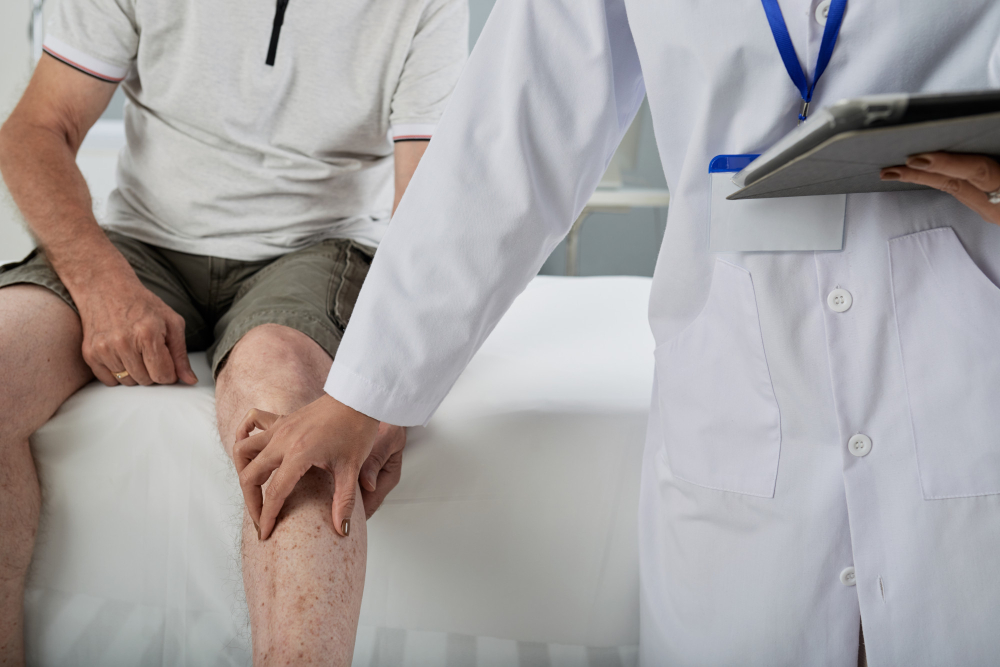
Partial knee replacement works only when the rest of the knee is genuinely healthy. The candidacy criteria are strict and they should be.
You May Be a Candidate If:
- Arthritis is confined to a single compartment of the knee (confirmed on X-ray and MRI)
- ACL is intact and functioning
- Knee deformity is mild - typically under 10 degrees varus or valgus
- Knee can bend at least 100 degrees before surgery
- Knee can fully straighten with no fixed flexion deformity above 5 degrees
- BMI is below 35
- You do not have inflammatory arthritis (rheumatoid arthritis affects all compartments)
- Pain is localized to one specific area of the knee, not diffuse
You Are Not a Candidate If:
- Multiple compartments of the knee show arthritis
- ACL is torn or attenuated
- Knee deformity is significant (above 10 to 15 degrees)
- There is rheumatoid arthritis or inflammatory arthritis
- Knee bending is restricted (below 90 degrees)
- BMI is above 40
- Pain is diffuse and not localized
Roughly 15 to 20 percent of knee arthritis patients in India qualify for partial knee replacement. Dr. Solunke evaluates each patient with weight-bearing X-rays in multiple views and MRI when needed to confirm candidacy.
Advantages of Partial Knee Replacement
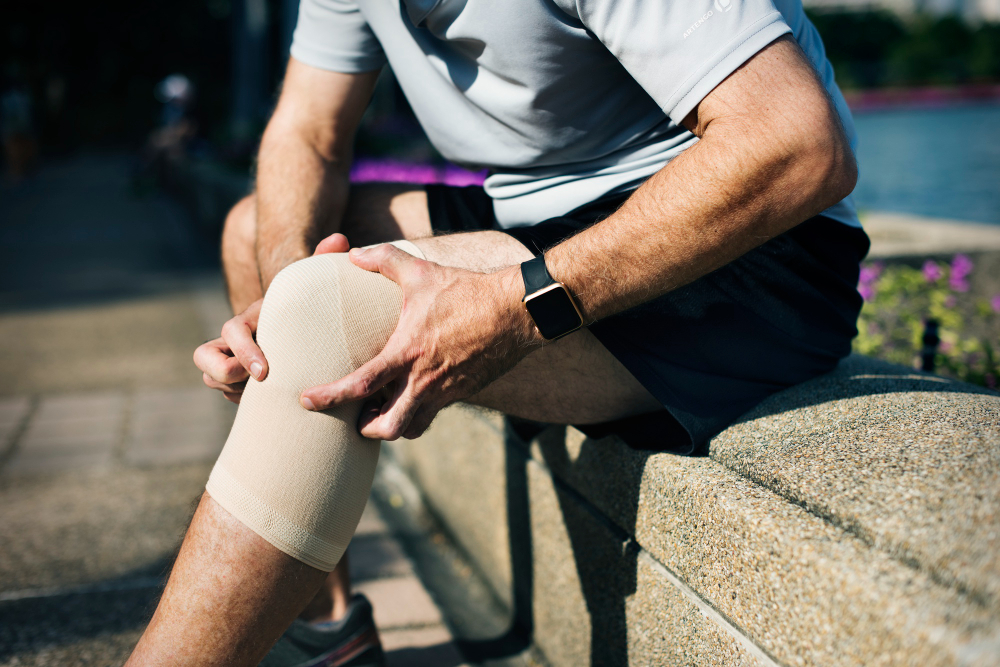
Bone-Sparing
Only a small portion of bone is removed compared to total knee replacement. This preserves bone stock for any future revision.
More Natural Feel
Because the cruciate ligaments and the unaffected compartments are preserved, the knee retains much of its native biomechanics. Most partial knee patients report that the operated knee feels closer to a natural knee than total knee patients do.
Faster Recovery
Smaller incision, less soft-tissue trauma. Most patients walk with stick by week one and return to driving by week three.
Less Blood Loss
Smaller surgery, less bleeding. Blood transfusion is rarely needed.
Shorter Hospital Stay
Most partial knee patients are discharged on day 2, sometimes on day 1.
Easier Revision (If Ever Needed)
If the partial knee fails years later, it can be revised to a total knee replacement with relatively standard implants.
Disadvantages and Risks
- Failure rate slightly higher than total knee replacement at 15 to 20 years
- Risk of arthritis progression in the other compartments, requiring revision to TKR
- Strict candidate selection means many patients are not eligible
- Demands surgical precision - done poorly, it fails fast
Robotic Partial Knee Replacement
Robotic technology adds particular value in partial knee replacement because the implant is small and must fit precisely. Manual partial knee surgery has a higher early-failure rate when implant positioning is suboptimal. Robotic partial knee replacement reduces this risk significantly. Dr. Solunke uses robotic guidance for most partial knee cases at Pune and partner hospitals in PCMC.
How the Surgery Is Performed
Under regional or general anesthesia. A 6 to 10 centimetre incision over the affected side of the knee. The surgeon enters through a small window in the soft tissue, exposes only the damaged compartment and replaces it with the implant. The other parts of the knee are not disturbed at all. The procedure takes 60 to 75 minutes.
The patient returns to the room within 2 hours and starts walking with a walker the same evening.
Pricing for Partial Knee Replacement in Pune
- Surgery and hospital cost: Rs. 1.7 to 2.5 lakh
- Implant cost (additional): Rs. 70,000 to Rs. 2 lakh
- Robotic-assisted partial knee replacement: Rs. 50,000 additional
- Hospital stay 1 to 3 days, pharmacy and pre-op investigations extra
Typical total inclusive bill range: Rs. 2.3 to 4 lakh per knee. Most insurance plans accept the surgery on cashless basis.
Recovery After Partial Knee Replacement
- Day 1: Walking with walker, basic exercises
- Day 2 to 3: Discharge home, walking with walker indoors
- Week 1 to 2: Stick by week 2 in most cases, knee flexion 100 to 110 degrees
- Week 3 to 4: Stick discarded for most indoor walking, return to driving
- Week 6 to 8: Full functional recovery, light gym, swimming
- Month 3: Most patients return to walking sports, golf, doubles tennis