Total knee replacement is the single most successful operation in modern orthopedics. Done well, it removes pain, restores function and gives a patient 20 to 25 years of normal walking. Done poorly, it produces stiffness, instability and a knee that feels worse than the arthritis it was meant to cure. The variable is the surgeon, the implant and the rehabilitation.
Dr. Swaroop Solunke has performed over a thousand knee replacements at his Pune clinic and partner hospitals across PCMC. He uses minimally invasive subvastus and robotic-assisted techniques wherever appropriate. The credentials behind that practice include a German fellowship in arthroplasty at St. Josef Hospital, Paderborn and a US robotic knee fellowship at the Stone Research Foundation, San Francisco.
What Is Total Knee Replacement?
Total knee replacement, often abbreviated as TKR, is a procedure where the worn-out cartilage and underlying bone of the knee are removed and replaced with implant components. The femur (thigh bone) end gets a metal cap. The tibia (shin bone) top gets a metal tray with a polyethylene insert that acts as the new cartilage. The kneecap may be resurfaced with a polyethylene button if needed.
The implant components are fixed to bone using bone cement (cemented technique) or are designed to allow bone to grow into the surface (uncemented). Most knee replacements in India and worldwide are cemented because of decades of proven longevity.
.png)
Who Needs Total Knee Replacement?
Total knee replacement is recommended when knee arthritis has reached a stage where conservative treatment is no longer effective.
- Severe osteoarthritis (Grade 3 or 4 on the Kellgren-Lawrence scale) with bone-on-bone changes
- Persistent pain that disturbs sleep or limits walking distance to under 15 minutes
- Failure of physiotherapy, oral medication and intra-articular injections
- Bowing of the leg (varus or valgus deformity) that affects gait
- Inability to climb stairs, get up from a chair, or perform daily activities
- Rheumatoid arthritis with knee involvement
- Post-traumatic arthritis from old fractures
Choosing the Right Knee Implant - A Practical Guide
Indian Implants
Manufactured by reputable Indian companies. Quality has improved dramatically in the last 15 years. Pricing is significantly lower. Suitable for older patients (above 65) with moderate activity expectations. Cost: implant component Rs. 70,000 to Rs. 1.2 lakh.
Korean Implants
Korean orthopedic manufacturing has set strong standards. Good quality polyethylene and design. Mid-tier pricing. Cost: implant component Rs. 1 to Rs. 1.5 lakh.
US Implants (Zimmer Biomet, Stryker, DePuy Synthes)
The most widely studied implants worldwide. Decades of published longevity data. Highly cross-linked polyethylene reduces wear. Suitable for active patients of any age. Cost: implant component Rs. 1.5 to Rs. 2.5 lakh.
German Implants (B. Braun Aesculap, LINK)
Premium European engineering. Excellent longevity data. Suitable for younger active patients who want maximum implant lifespan. Cost: implant component Rs. 2 to Rs. 3 lakh.
Special Implant Types
- Gender-specific knee implants - designed for the typically smaller and differently shaped female knee
- High-flexion implants - designed for patients who need to sit cross-legged or kneel
- Cementless implants - relies on bone ingrowth, suitable for younger patients with good bone quality
- Rotating platform implants - accommodate natural rotation, reduce polyethylene wear
Surgical Techniques Available
Conventional Total Knee Replacement
Standard medial parapatellar approach. The kneecap is moved sideways to expose the joint. Time-tested technique with predictable outcomes.
Minimally Invasive Subvastus Approach
The quadriceps muscle is lifted rather than cut. Smaller incision (8 to 12 cm). Faster early recovery. Dr. Solunke's preferred technique for primary TKR in suitable candidates.
.png)
Robotic-Assisted Total Knee Replacement
Computer-guided precision for implant alignment and soft-tissue balance. Adds Rs. 50,000 to the cost. Best for younger active patients and those with significant deformity.
How the Surgery Is Performed
Under regional anesthesia (spinal block) most often, with sedation. General anesthesia when medically required. The surgery takes 60 to 90 minutes.
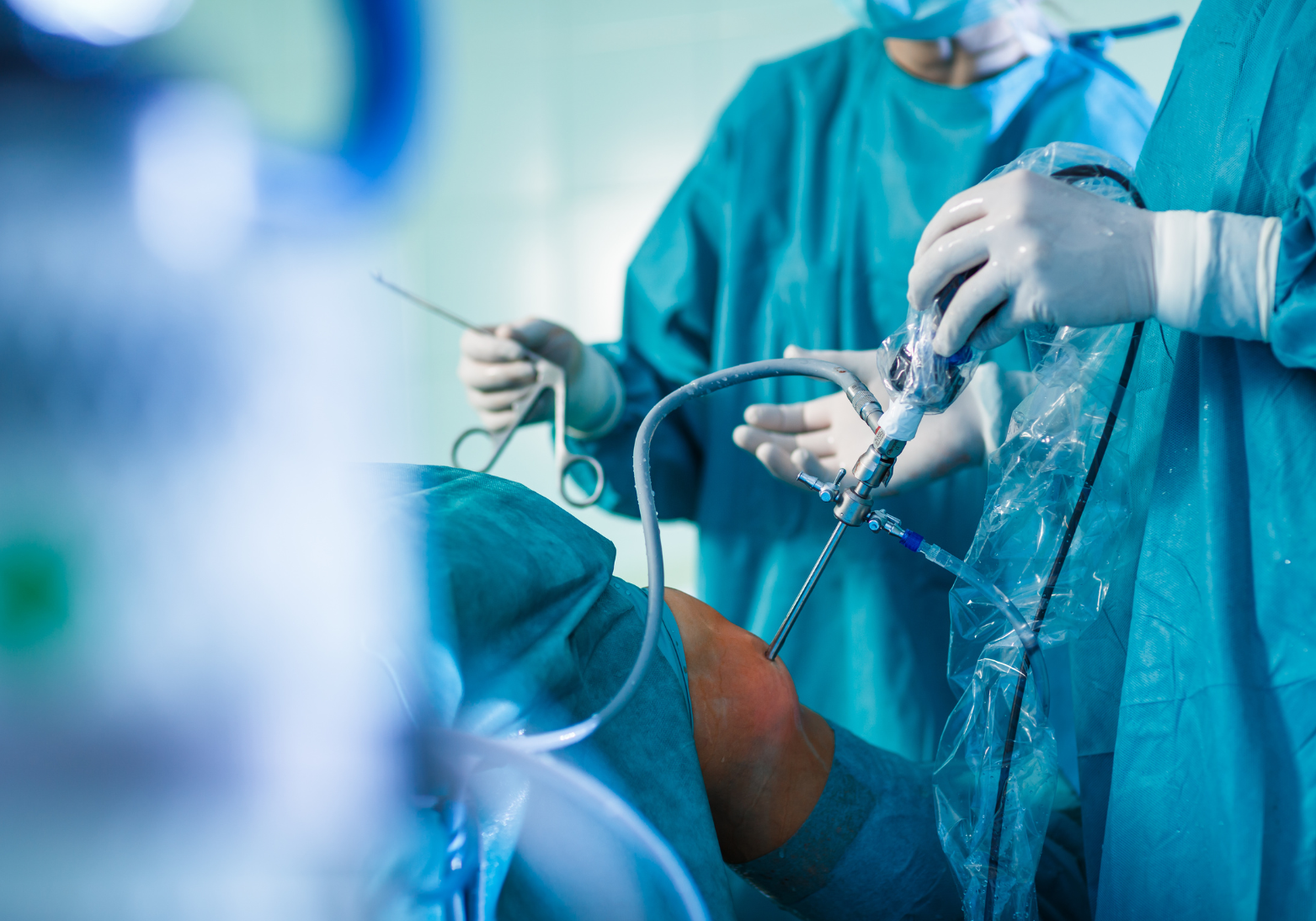
The surgeon makes an incision over the front of the knee, exposes the joint, removes the damaged cartilage and bone, prepares the bone surfaces with precise cuts, places trial components to test fit and balance and finally places the actual implant secured with bone cement. The wound is closed in layers and a drain is inserted.
Pricing for Total Knee Replacement in Pune
- Surgery and hospital cost: Rs. 1.7 to 2.5 lakh per knee
- Implant cost (additional): Rs. 70,000 to Rs. 3 lakh depending on brand
- Robotic-assisted surgery: Rs. 50,000 additional
- Hospital stay: 3 to 5 days
Typical total inclusive bill range: Rs. 4 to 7 lakh. Insurance plans typically cover shoulder replacement on cashless basis.
Recovery After Shoulder Replacement
Week 1 to 4
Arm in a sling. Passive range of motion only - the physiotherapist moves the arm, the patient does not lift it actively. Pain control with oral medication. Discharge typically on day 3 or 4.
Week 4 to 8
Sling discontinued for most activities. Active assisted range of motion. Light pendulum and table-top exercises.
Week 8 to 12
Active range of motion against gravity. Initial light resistance exercises.
Month 3 to 6
Progressive strengthening. Return to overhead activities. Most patients regain enough function to drive, shop, do household tasks and reach overhead by month 4 to 6.
What Patients Can Do After Shoulder Replacement
- Drive, cook, shop, dress and bathe independently
- Reach overhead shelves and combs
- Light gym exercises and swimming
- Walking sports - golf, light doubles tennis, recreational cricket fielding
- Yoga with modifications
- Carry shopping bags up to 5 to 8 kg in the operated arm
Activities to Avoid After Shoulder Replacement
- Heavy weight lifting above 10 kg
- Contact sports with risk of falling on the shoulder
- Repeated heavy overhead work (manual labour, painting ceilings)
- Throwing sports at competitive intensity