Hip replacement has been a high-success procedure for sixty years. The implants are good. The technique is well-established. So why does robotic technology matter at all? The answer comes down to two specific problems that even experienced surgeons struggle with - acetabular cup orientation and leg length restoration. Robotics solves both.
Dr. Swaroop Solunke trained in hip arthroplasty in Germany at St. Josef Hospital, Paderborn, where attention to leg length and cup positioning is built into the surgical culture. He extended this with structured training in robotic joint replacement at the Stone Research Foundation in San Francisco. The combination matters - robotic technology is only as good as the surgeon using it.
What Is Robotic Hip Replacement?
Robotic hip replacement is a total hip replacement done with the help of a computer-guided robotic system. A pre-operative CT scan creates a 3D model of the patient's pelvis and hip. The surgeon plans cup size, cup orientation, stem size and exact leg length on this model before any cut is made.
During surgery, the robotic system guides the reaming of the acetabulum (the socket) and the placement of the cup with millimetre accuracy. Leg length is measured live during the procedure and adjusted to match the planned target.
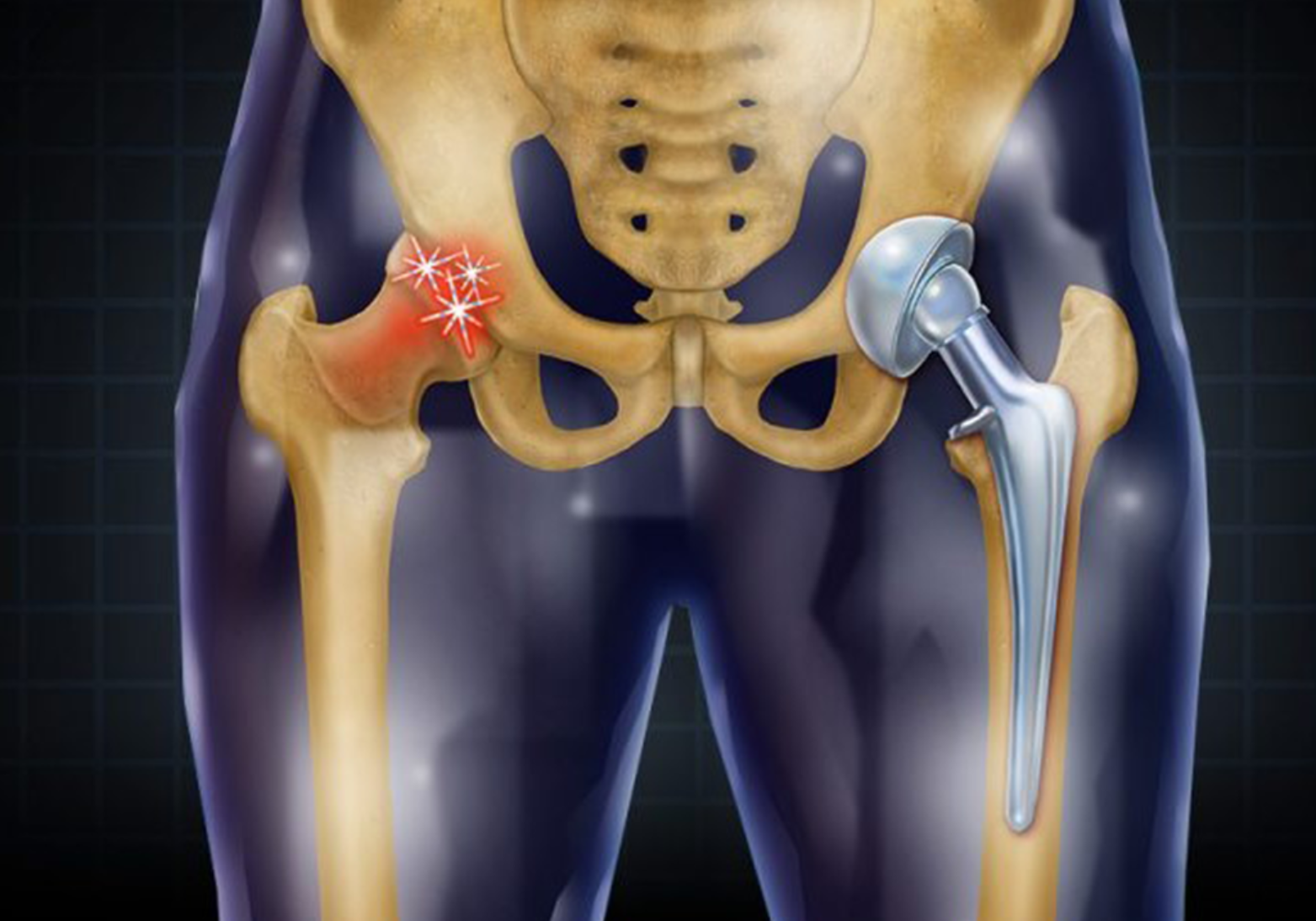
The Two Problems Robotic Hip Replacement Solves
Problem 1 - Acetabular Cup Orientation
The cup that holds the new ball of the hip must be oriented at a specific angle. Too vertical and the hip dislocates easily. Too horizontal and the implant wears prematurely. The 'safe zone' for cup orientation is roughly 5 to 10 degrees in any direction.
In manual hip replacement, surgeons hit the safe zone in 70 to 80 percent of cases, depending on experience. In robotic hip replacement, the rate is above 95 percent. For young active patients who will live with the implant for 25 years or more, this matters.
Problem 2 - Leg Length Restoration
After hip replacement, both legs should be the same length. In practice, leg length differences of 5 to 10 mm occur in roughly 15 percent of manual hip replacements. Larger differences (10 to 20 mm) occur in 5 to 8 percent.
A 10 mm leg length difference is noticeable. Patients walk with a slight limp, develop low back pain and use a heel insert in the shorter shoe to compensate. Robotic hip replacement reduces this complication to under 2 percent.
.png)
Who Should Consider Robotic Hip Replacement?
Strong Candidates
- Younger active patients (40 to 65) who will live with the implant for two to three decades
- Patients with significant pre-existing leg length differences
- Patients with hip dysplasia, post-traumatic deformity or prior hip surgery
- Patients undergoing dual-mobility or large-head hip implants where cup orientation is even more critical
- Patients with high body mass index where manual landmark identification is harder
Robotic Surgery Adds Less Value If
- The patient has straightforward osteoarthritis with normal pelvic anatomy
- Cost is a major constraint
- The patient is elderly with limited expected implant lifespan
How Robotic Hip Replacement Is Performed
- Step 1 - Pre-operative CT scan of the pelvis.
- Step 2 - 3D surgical plan. The surgeon plans cup size, cup orientation (anteversion and inclination), stem size, neck length and target leg length.
- Step 3 - Operation. Anesthesia (regional or general). The patient is positioned and tracking pins are placed on the pelvis. A 10 to 12 centimetre incision (posterior or anterior approach) gives access to the hip joint.
- Step 4 - Robotic-assisted reaming. The robotic arm guides the reamer to the planned cup position. The cup is placed under robotic guidance.
- Step 5 - Stem placement. The femur is prepared and the stem inserted. Trial heads of various sizes are tested for stability and leg length, with the robot measuring leg length live.
- Step 6 - Final implant placement, closure and post-operative care. Total surgery time is 90 to 120 minutes - about 15 to 20 minutes longer than manual hip replacement.
.png)
Pricing for Robotic Hip Replacement in Pune
- Robotic hip replacement: Rs. 1.2 to 1.5 lakh excluding implant and pharmacy + Rs. 50,000 robotic charge
- Implant cost (additional): Rs. 80,000 to Rs. 2.5 lakh depending on bearing surface and material
- Total inclusive bill range at our partner hospitals: Rs. 3 to 5 lakh
- Hospital stay 4 to 5 days, pre-op investigations and pharmacy extra
Mediclaim covers the surgery itself. The robotic charge is sometimes covered and sometimes not - confirm in pre-authorization.
Recovery After Robotic Hip Replacement
Recovery is similar to standard hip replacement. Walking with walker on day one. Discharge on day three or four. Walker to stick at week three. Most patients return to driving and desk work at week six. Full recovery at three to six months.
The precision of robotic surgery often produces noticeably more symmetric gait in the early weeks, particularly in patients who had pre-operative leg length differences.